Education
Future Uncertain for DePaul University Student Group Providing Sex Education, Contraception
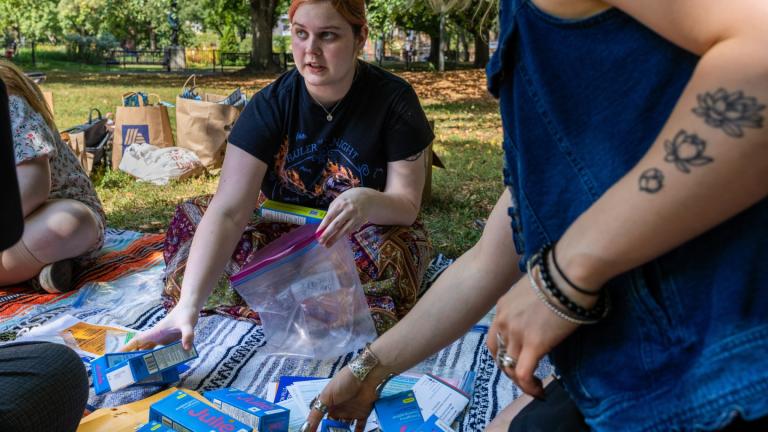
A network of DePaul University students is discreetly handing out contraception just steps away from campus.
The Planned Parenthood Generation Action (PPGA) student group delivers birth control supplies through a program called “Womb Service” and holds sex education seminars named “pillow talks” with peers. DePaul strictly prohibits the distribution of “birth control devices” on campus, saying it’s at odds with the school’s Catholic identity.
The university formally deactivated the group as a student organization last month. Despite the setback, the group is still pushing ahead with its mission and will meet with the college’s administration this week to discuss the group’s possible future at DePaul.
In a statement to WTTW News, the university said: “DePaul University has made the decision to deactivate Planned Parenthood Generation Action’s status as a registered student organization due to its formal affiliation with Planned Parenthood. This step reflects DePaul’s responsibility to uphold its Catholic, Vincentian values, which do not allow formal partnerships with organizations whose core missions are in direct conflict with the teachings of the Catholic Church. We remain committed to supporting student-led dialogue on important issues, including reproductive health.”
DePaul senior Maya Roman has been involved with PPGA since its inception in 2022. She said the relationship between the religious institution and the organization has been contentious from the beginning.
“It’s not accurate to say that reproductive justice and specifically issues of contraception and abortion don’t align with Catholic values,” said Roman, PPGA’s chapter president. “The majority of Catholic women have used some form of contraception at least once in their life.”
Roman recalls her first PPGA meeting where the group started with an ice breaker question: “What were people’s sexual health education like?” The answers were “abysmal,” Roman said. Answers ranged from no education to very little, and education on consent was totally nonexistent.
Sexually transmitted infections and unintended pregnancies are particularly common for college-aged people. A 2023 report from the U.S. Centers for Disease Control and Prevention (CDC) found that nearly half of all reported cases of chlamydia, gonorrhea and syphilis were among people aged 15 to 24.
“Contraception is not cheap, especially if you don’t have access to insurance,” Roman said. “And universities are not providing those services.”
Debates over contraceptives and sex education have been ongoing for decades. President Donald Trump’s administration has opposed some access to reproductive health care, as has the U.S. Supreme Court.
Roman thinks the Trump presidency played a part in DePaul’s decision to ban the organization from campus life. The university has recently been in the national spotlight in relation to federal probes investigating antisemitism and DEI practices.
“It’s definitely a personal theory of mine,” Roman said. “A lot of universities throughout the country are caving and bowing down to the administration’s demands because of worries over funding and being able to continue as a university. Instead of standing up for their students and upholding the historical right college campuses have in terms of activism and organizing, we’re seeing them instead bow to demands.”
Roman and other leading members of the organization are meeting with DePaul’s administration Friday to discuss PPGA possibly reregistering as a student group by dropping its affiliation with Planned Parenthood and other clinics that provide abortions.
Roman is hopeful the reproductive health work will continue.
Related Stories